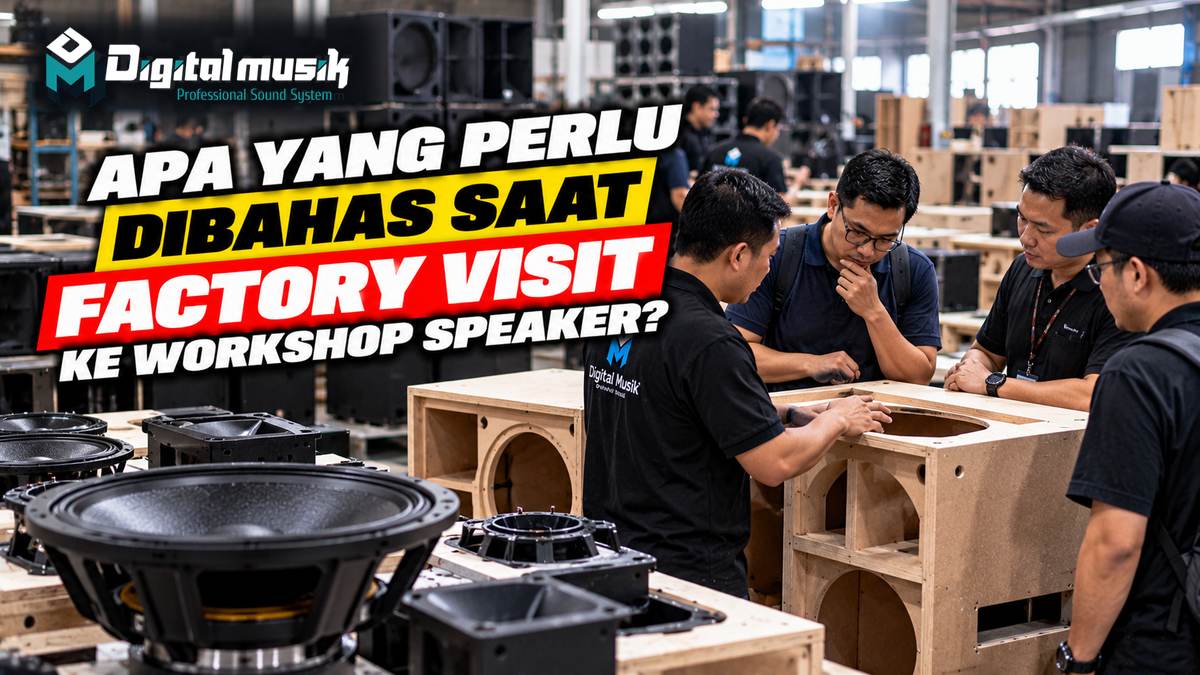
Making a direct visit to a workshop or speaker manufacturing factory is a crucial step for anyone serious about understanding the production process, quality, and capabilities of a manufacturer. Whether you are an audio professional looking for an OEM partner, a rental owner wanting to order custom speaker cabinets, or simply want to delve deeper into the world of speaker manufacturing, there are several important points that must be discussed and observed during the visit.
This visit is not just about looking around, but about gaining in-depth information that will help you make informed decisions. Without clear guidance, a visit can be less effective. Therefore, it is important to have a structured list of questions and areas of observation.
1. Production Capability and Scale of Operations
The first question to ask is about the production capacity of the workshop. Ask:
- How many units of speaker cabinets or other audio products can they produce per day/week/month?
- What is the production flow from raw materials to finished products?
- What facilities do they have (e.g., CNC machines for wood cutting, assembly areas, testing rooms)?
- Do they have a dedicated production line for custom speaker cabinets or only mass production?
Directly observing the work area, the number of technicians involved, and how materials are processed will provide a real picture of their ability to handle orders, both small and large.
2. Material and Component Quality
The quality of a speaker heavily depends on the materials used. Ask about:
- Types of wood or other materials used for speaker cabinets (e.g., MDF, Plywood, Polypropylene). What are the advantages and disadvantages of each material type for different applications?
- Source of components such as drivers (woofer, tweeter), crossovers, and connectors. Do they use specific brands or custom components?
- What is the process for selecting and inspecting the quality of materials and components before they are used in production?
Pay attention to details such as material thickness, quality of panel joints, and neatness of component installation. If possible, ask for samples of the materials they commonly use.
3. Design and Engineering Process
For custom speaker cabinets or OEM product development, design and engineering capabilities are vital. Ask questions about:
- How does the design process begin? Is it based on client specifications, or do they also offer design services from scratch?
- What software or tools are used for acoustic simulation and 3D design?
- How do they handle acoustic or technical challenges that arise during the design process?
- Do they have a competent R&D team or acoustic engineers?
See if they have examples of designs they have created or prototypes currently under development. This demonstrates their innovation and adaptation capabilities.
4. Quality Control (QC) and Testing
The quality control stage is a guarantee that the products produced meet standards. Ask about:
- Quality Control procedures applied at each stage of production (from material reception, assembly, to finished products).
- Testing methods performed to ensure speaker acoustic performance (e.g., frequency response, impedance, distortion measurements).
- What measuring instruments are used in testing? Are these instruments calibrated?
- How are products that fail QC handled?
If possible, witness the testing process directly. This provides greater confidence in product quality.
5. Production Flexibility and Customization
If you are looking for specific solutions, the flexibility of the workshop is key. Ask:
- How flexible are they in accommodating customization requests, whether in terms of design, materials, or finishing?
- What is the minimum order quantity (MOQ) for custom or OEM production?
- What is the process for design revisions if needed after the initial stage?
- Can they assist with branding or adding logos to products?
Understanding the extent to which they can adapt to your unique needs will be very helpful in choosing the right partner.
6. Experience and Portfolio
Ask to see their portfolio of past projects. Ask about:
- What types of projects do they most frequently handle (e.g., studio monitor speakers, concert line arrays, installation speakers, flight cases)?
- Who are their previous clients (if allowed to be shared)?
- Do they have experience in export or meeting international standards?
A diverse portfolio and reputable clients can be an indicator of their credibility and experience in the professional audio industry.
7. Additional Services and Support
Beyond production, consider other services they might offer:
- Do they provide acoustic design consultation or component selection services?
- What is the process for product shipping and packaging? Do they provide flight case or hardcase solutions if needed?
- What warranty policies or after-sales support do they offer?
Understanding the entire ecosystem of services they offer can provide a more complete picture as a potential partner.
Conducting a structured factory visit with the right questions will equip you with valuable information to evaluate the capabilities of a speaker workshop. If you are in the exploration phase for OEM speaker cabinet, custom speaker cabinet, or even flight case and hardcase needs, PT Digital Musik Indonesia can be your discussion partner. We understand the importance of technical details and quality in the professional audio ecosystem.