The Importance of Calculating Speaker Needs According to Room Size
Choosing the right number of speakers for a room often feels confusing. Many people tend to buy excessive speakers hoping for louder sound, but the result can be unbalanced, even damaging the room's aesthetics. Conversely, a lack of speakers will make the sound feel underpowered and uneven. Calculating speaker needs based on room size is a crucial step to ensure optimal audio quality, both for professional and personal needs.
This article will guide you through understanding the key factors in determining the ideal number of speakers, from room size, type of use, to acoustic characteristics. The goal is for you to get practical and applicable recommendations.
Key Factors in Determining the Number of Speakers
Before going further, understand that there is no one-size-fits-all magic formula. However, these key factors will be your main guide:
1. Room Size and Shape
This is the most fundamental factor. The larger the room, the more sound sources (speakers) are needed to achieve even coverage. Room shape also matters; rectangular rooms may require speaker placement on opposite sides, while rooms with many corners or irregular shapes require a more complex placement strategy.
2. Ceiling Height
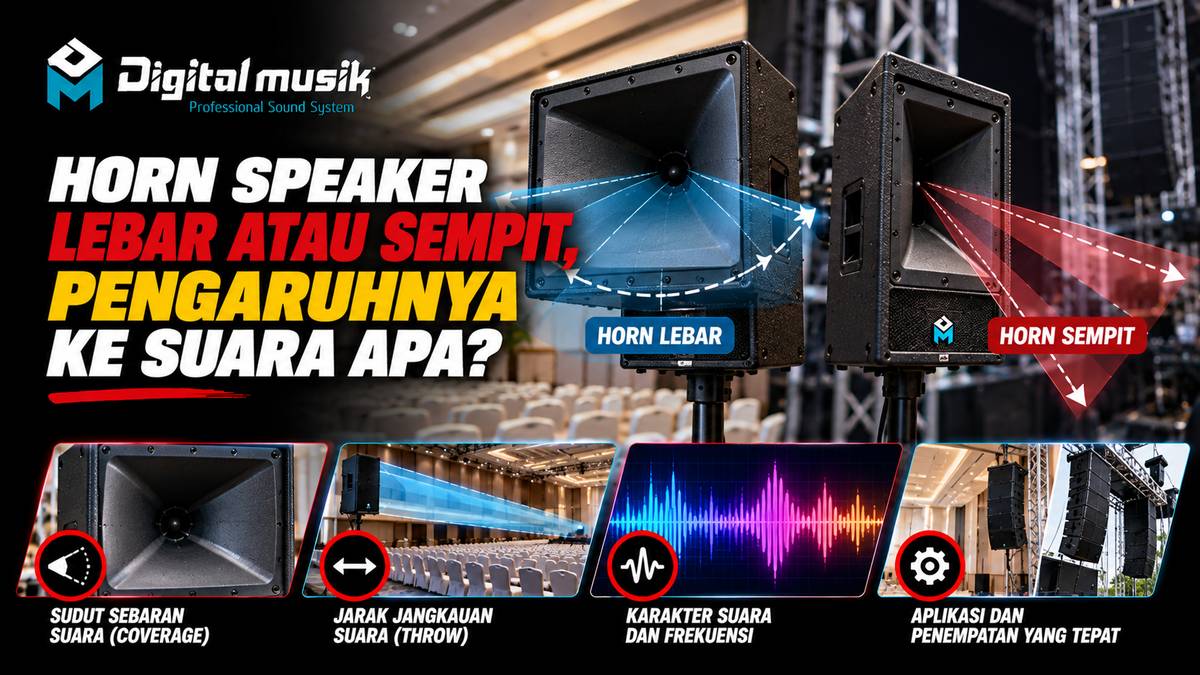
High ceilings can affect sound dispersion. Sound tends to spread downwards, but high ceilings can reduce this effectiveness. You may need speakers with a wider dispersion angle or an increased number of speakers to ensure sound reaches the listening area evenly.
3. Room Usage Purpose
Is the room used for presentations, music concerts, film screenings, or just background music? The required SPL (Sound Pressure Level) or loudness level will differ. A room for concerts certainly needs more power and wider coverage compared to a room for presentations.
4. Speaker Type (Full-Range, Subwoofer, etc.)
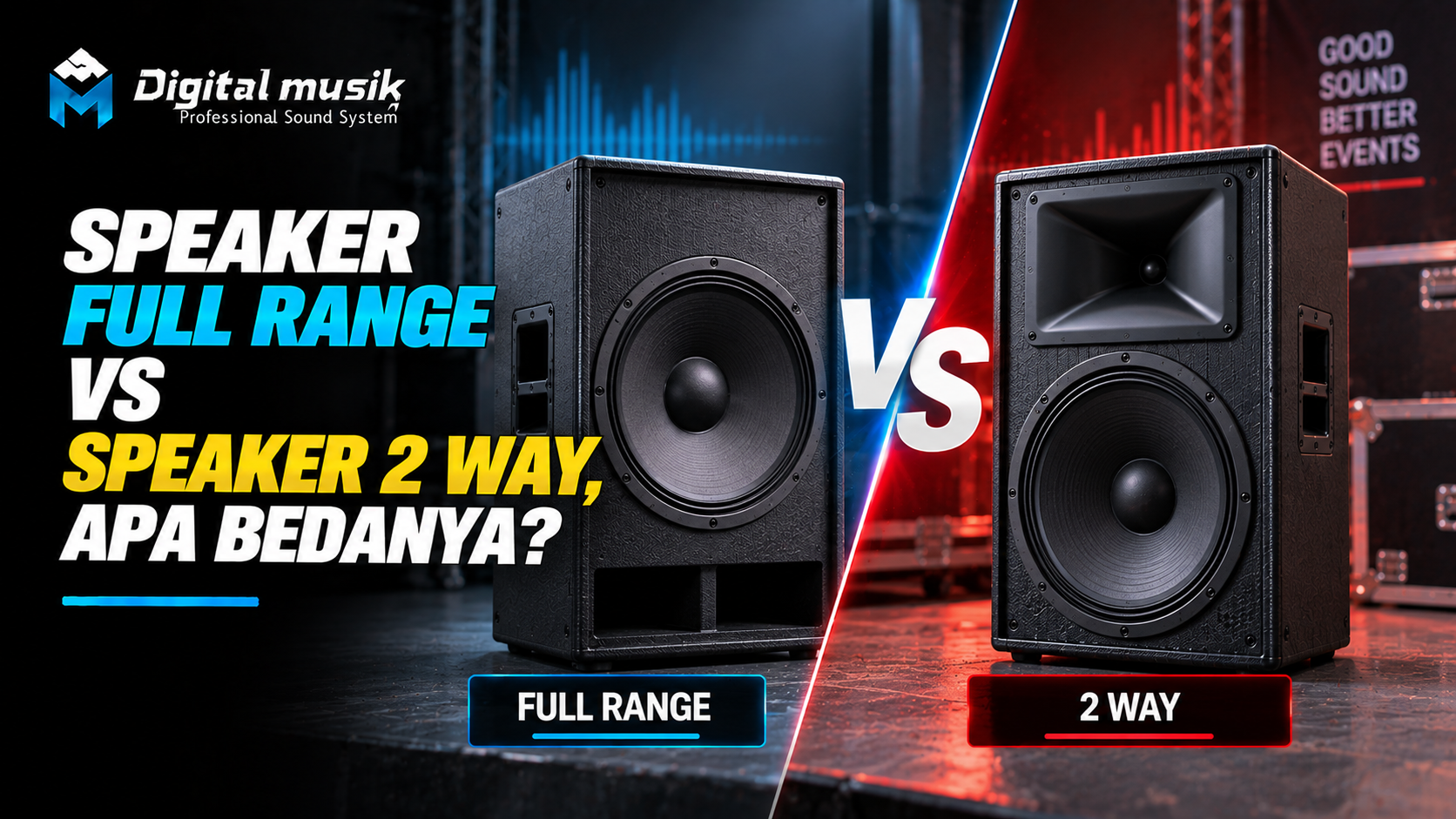
This calculation must also consider the type of speakers you are using. Full-range speakers typically cover low to high frequencies. However, for applications requiring strong bass thumps, adding subwoofers becomes important. The number and placement of subwoofers also need to be considered separately to avoid null spots (areas without bass).
5. Room Materials and Acoustics
Hard walls (glass, ceramic) tend to reflect sound, while soft materials (carpets, curtains, acoustic panels) can absorb sound. A highly reflective (reverberant) environment may require adjusting the number of speakers or using speakers with a more directional dispersion pattern. Conversely, a highly sound-absorbent room might need slightly more power.
Speaker Requirement Estimation Methods
While highly precise calculations require professional acoustic analysis, there are several estimation methods you can use:
Area-Based Approach (Area Coverage)
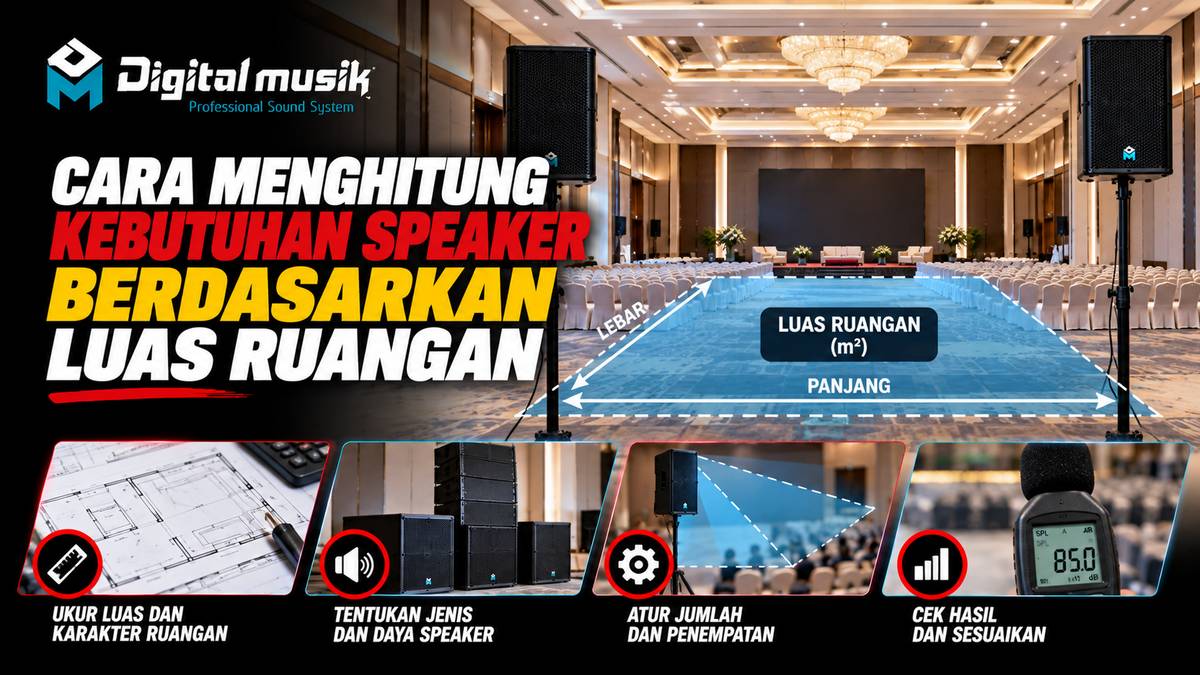
The most common method is to estimate the area that each speaker needs to cover. For full-range speakers designed for general coverage, you can use a rough guide:
- Small Rooms (e.g., bedroom, small meeting room): 1 stereo speaker (2 units) or 1 strategically placed mono speaker.
- Medium Rooms (e.g., living room, small cafe, classroom): 2-4 full-range speakers, depending on the layout.
- Large Rooms (e.g., hall, auditorium, small concert venue): 4 full-range speakers or more, often combined with subwoofers.
Generally, one good quality full-range speaker can cover an area of approximately 15-30 square meters with adequate coverage for general applications. For more demanding applications, this number might be smaller.
Distance-Based Approach (Distance Coverage)
You can also consider listening distance. Speakers have an effective range. Ensure no area is too far from a speaker, causing the sound to be weak. For large areas, adding speakers in different zones (e.g., front speakers and rear speakers) will be more effective than just adding one very powerful speaker at the front.
Target SPL-Based Approach
If you have a specific target SPL (e.g., 90 dB for presentations, 105 dB for live music), you need to look at the speaker's sensitivity specifications (dB @ 1W/1m) and its maximum power. The higher the target SPL, the more power is needed, and this often means more speakers or more powerful speakers.
Scenario Examples
Scenario 1: Indoor Cafe (20m x 10m = 200 m²)
Need: Clear and even background music, guest conversations clearly audible.
Estimate: Assuming one full-range speaker covers 20-25 m², you might need approximately 8-10 speakers. Strategic placement at several points (e.g., 4 on each long side) will be better than 2 large speakers at the ends of the room. Consider speakers with a sufficiently wide dispersion angle (e.g., 90-120 degrees).
Scenario 2: Multi-purpose Hall (30m x 15m = 450 m²)
Need: Suitable for presentations, seminars, or acoustic music performances.
Estimate: For even coverage, you might need 12-16 full-range speakers. If there's a need for strong bass, add 2-4 subwoofers placed at the front or sides of the stage. Consider a PA (Public Address) system with more directional speakers in the rear area if the hall is very long.
Additional Tips for Speaker Placement
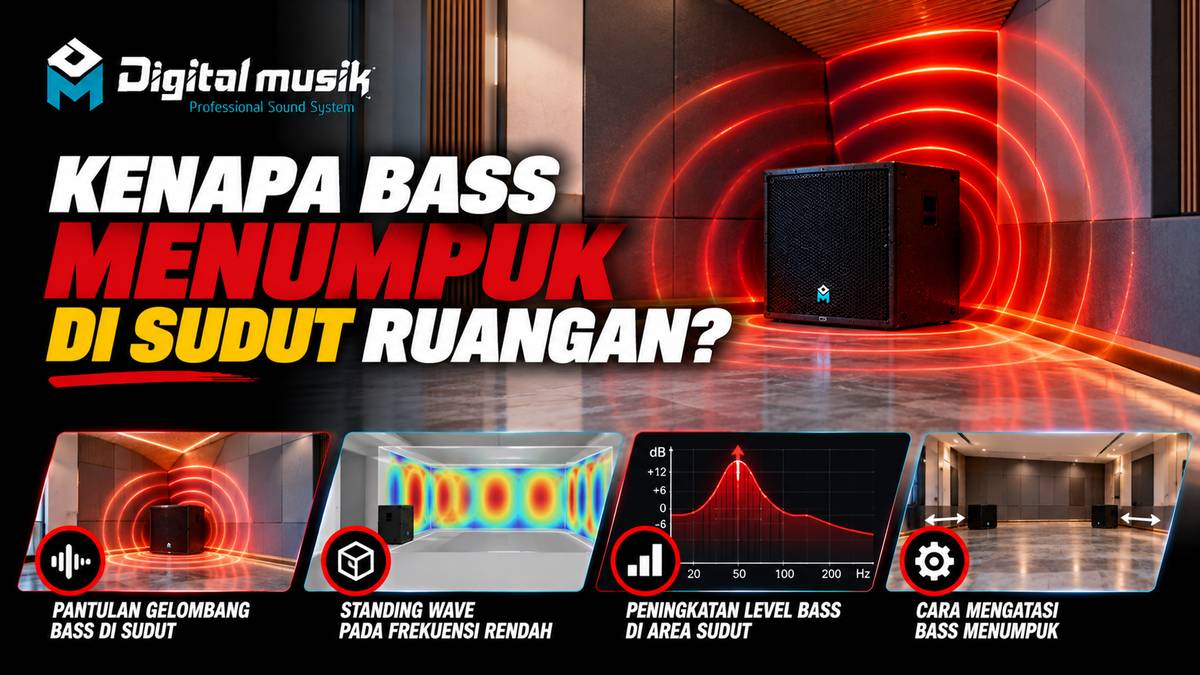
- Avoid Room Corners: Placement in corners can unevenly boost low frequencies (boomy) and create excessive sound reflections.
- Correct Height: Speakers are usually most effective when placed at ear level for listeners in sitting or standing positions.
- Overlapping Coverage: Ensure that the coverage areas of speakers slightly overlap to avoid sound gaps.
- Consider Power Source: Speaker placement must also consider access to adequate power sources.
When to Consider Professional Help?
If you are dealing with a very large room, have an unusual shape, or require very specific audio quality (e.g., for a recording studio, theater, or concert installation), it is highly recommended to consult with audio professionals. They can perform acoustic measurements of the room and design the most suitable system.
PT Digital Musik Indonesia, as a company operating in the professional audio ecosystem, can be your discussion partner. We understand the importance of proper speaker placement and calculation for various needs. If you are planning an audio installation or require custom solutions, do not hesitate to discuss with our team.