Why Does Bass Often Feel Stronger in Room Corners?
You may have experienced this: when listening to music or watching a movie, certain areas in a room, especially the corners, feel like they have a much stronger and 'muddier' bass thump compared to other areas. This phenomenon is common and closely related to the nature of low-frequency sound waves (bass) and their interaction with room acoustics.
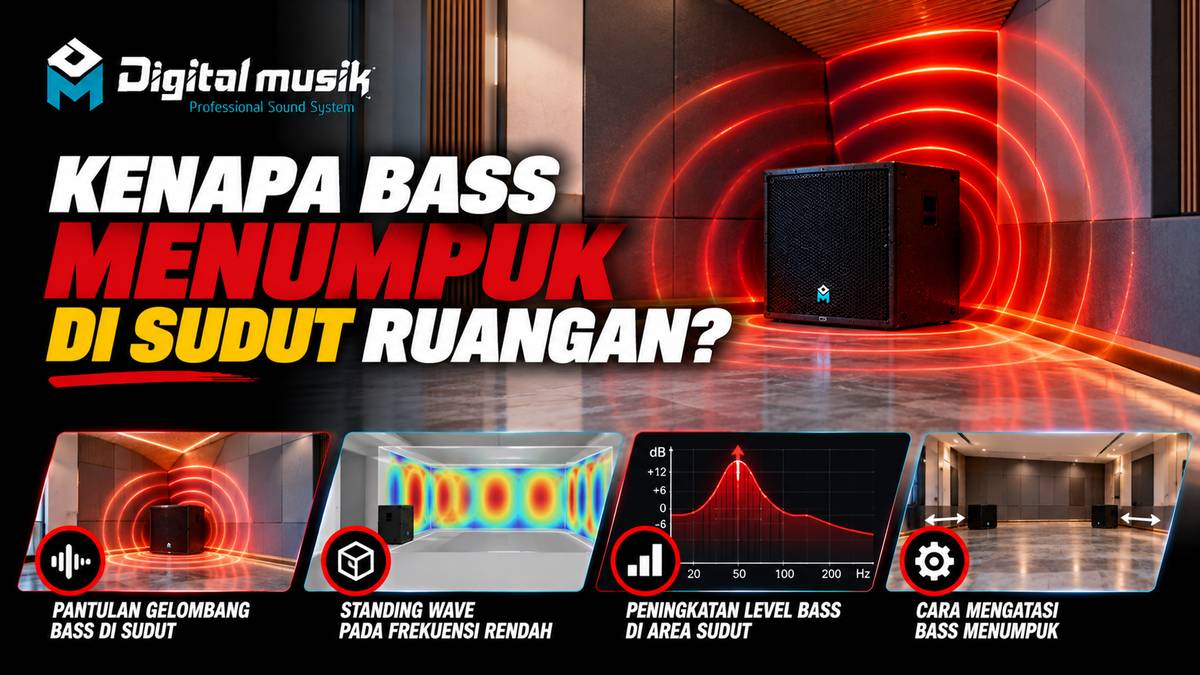
The core of the problem is how bass sound waves interact with walls, floors, and ceilings. Low frequencies have very long wavelengths. When these waves encounter hard surfaces like walls, they reflect. In room corners, the meeting of reflected waves from two walls (and often the floor or ceiling) creates what is known as 'resonance' or 'room modes'. This causes a buildup of sound energy at certain frequencies, which often fall within the bass range.
Understanding Room Acoustics and Bass Principles
Every room has its own resonance modes, determined by the room's dimensions (length, width, height). These modes are frequencies at which sound will be naturally amplified by the room itself. Bass frequencies, with their large wavelengths, are highly susceptible to the effects of these room modes. Room corners are points where the accumulation of sound energy (both from direct sources and reflections) tends to be greatest.
Imagine it like water waves in a bathtub. If you slosh the bathtub at a certain frequency, the water waves will become larger at specific points. A similar phenomenon occurs with sound in a room. In the corner, the bass energy from your speakers 'meets' the bass energy reflected from the walls, creating unwanted amplification and making the bass feel 'heavy', 'boomy', or uncontrolled.
Main Causes of Bass Buildup in Corners
Several factors contribute to the phenomenon of bass buildup in corners:
- Room Modes: As explained earlier, room dimensions create natural resonance frequencies. These frequencies can be significantly amplified at certain points, especially in corners.
- Wall Reflections: Bass waves reflect off walls. In corners, reflections from two (or more) walls meet and can reinforce each other (constructive interference), increasing the sound pressure level (SPL) of bass in that area.
- Speaker/Subwoofer Placement: If speakers or subwoofers are placed too close to walls or in corners, this will exacerbate reflection issues and room mode excitation.
- Speaker/Subwoofer Characteristics: Some speaker or subwoofer designs may be inherently more susceptible to room mode excitation or have radiation patterns that worsen bass buildup in certain areas.
Practical Solutions for Addressing Bass Buildup
Addressing the problem of bass buildup in corners requires a combination of clever placement and, sometimes, acoustic treatment.
1. Proper Speaker/Subwoofer Placement
This is the first and most crucial step:
- Avoid Corners: Do not place the subwoofer directly in the corner of the room if possible. Try to pull it slightly away from the walls.
- Rule of Thirds: Experiment with placing the subwoofer at approximately one-third of the wall distance. For example, if your room is 6 meters long, try placing the subwoofer 2 meters from the back wall.
- 'Subwoofer Crawl': This is a very effective method. Place the subwoofer in your primary listening position (where you usually sit or stand). Play music with bass you are familiar with, then 'crawl' around the room, listening to where the bass sounds most even and controlled. Mark that location, then move the subwoofer there.
- Stereo Placement: If you are using two subwoofers, symmetrical placement on the left and right sides of the room, or front and back, can help flatten the bass response.
2. Room Acoustic Treatment
If placement alone is not enough, you might need to consider acoustic treatment:
- Bass Traps: These are acoustic panels specifically designed to absorb low-frequency energy. Placing bass traps in room corners (where bass energy accumulates most) is very effective in reducing this problem.
- Furniture and Decoration: Soft objects like thick carpets, curtains, sofas, and bookshelves can help absorb sound reflections, including bass, although their effect on very deep bass may be limited compared to specialized bass traps.
- Room Dimension Changes: This is a more drastic solution and usually impractical for existing rooms, but changing room dimensions can significantly alter its resonance modes.
3. Use of DSP (Digital Signal Processing)
For more advanced audio systems, Digital Signal Processing (DSP) can be used to compensate for room modes. With the right measurement tools, you can adjust the EQ on the DSP to reduce problematic frequencies or boost lacking frequencies.
When to Seek Further Consultation?
If you have tried various basic placement and acoustic treatment methods but are still facing uneven bass issues, it might be time to get a professional opinion. Understanding the interaction between speakers, the room, and the listener is key to achieving optimal audio quality. Sometimes, the most effective solutions come from a deep understanding of how your audio system interacts with its physical environment.
PT Digital Musik Indonesia operates in the professional audio ecosystem and can be your discussion partner in understanding room acoustic challenges, selecting appropriate speakers or subwoofers, and custom solutions for your audio system. If you are planning a new audio installation or wish to optimize an existing system, consulting with an expert can provide valuable insights.