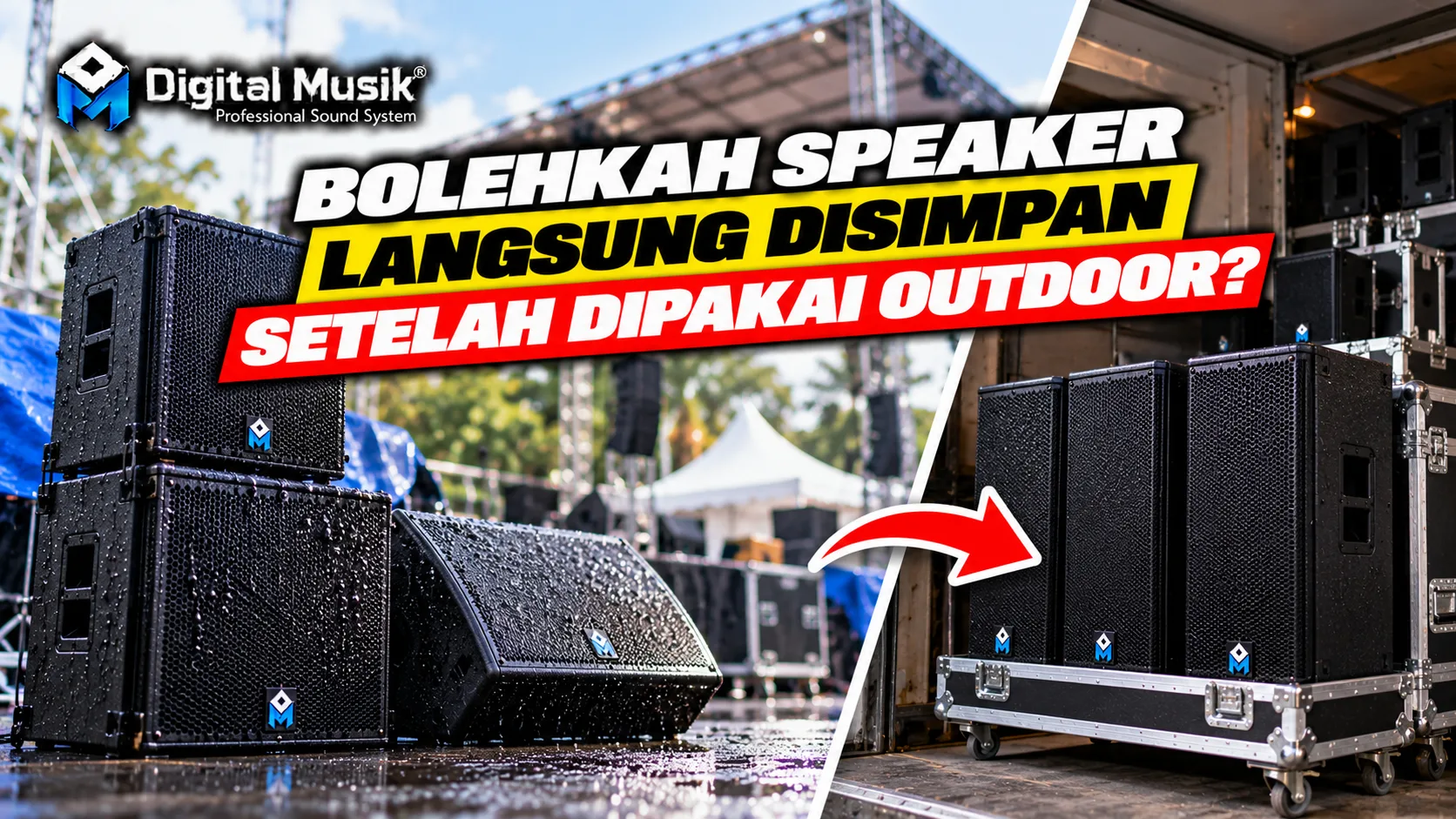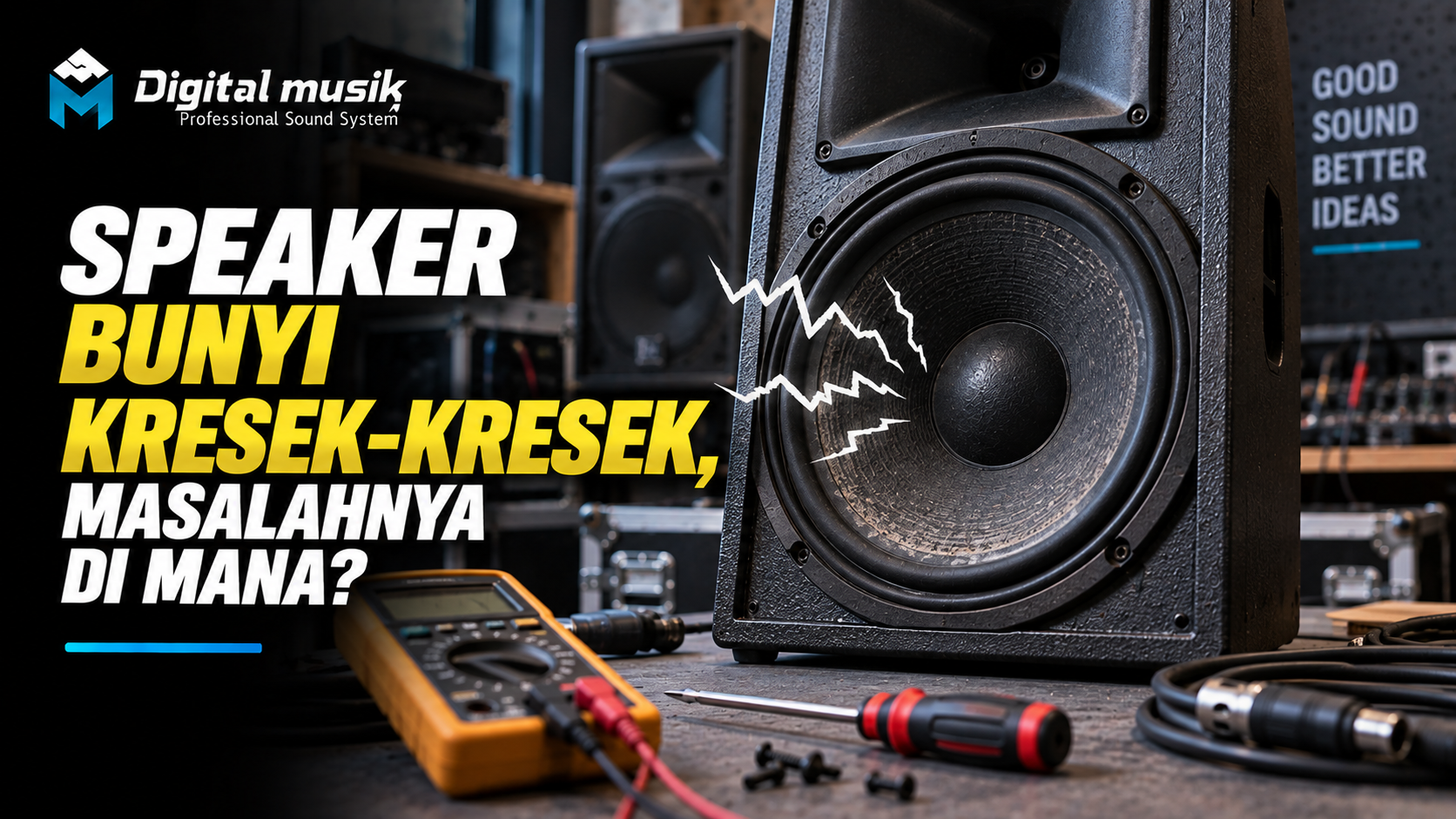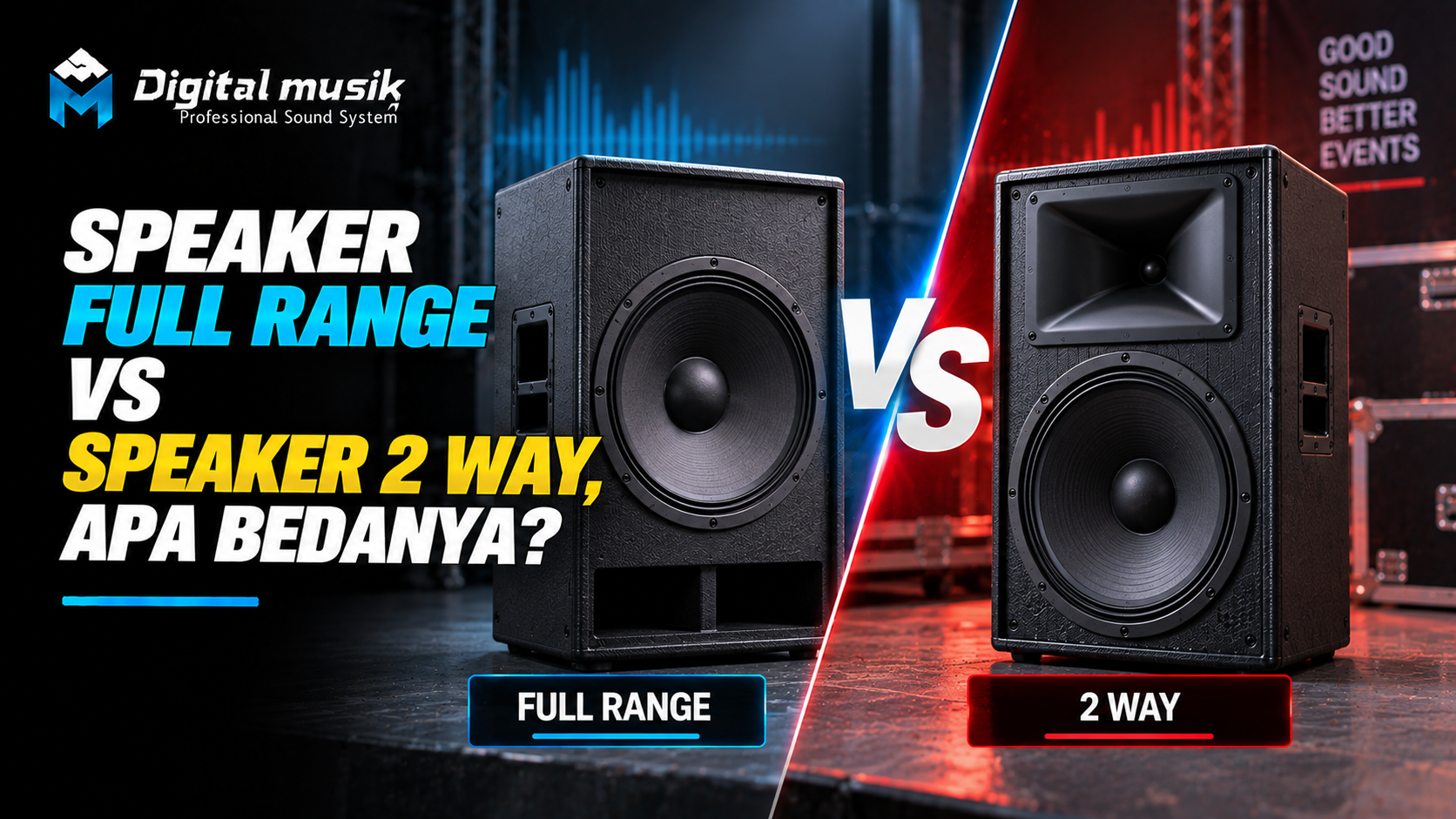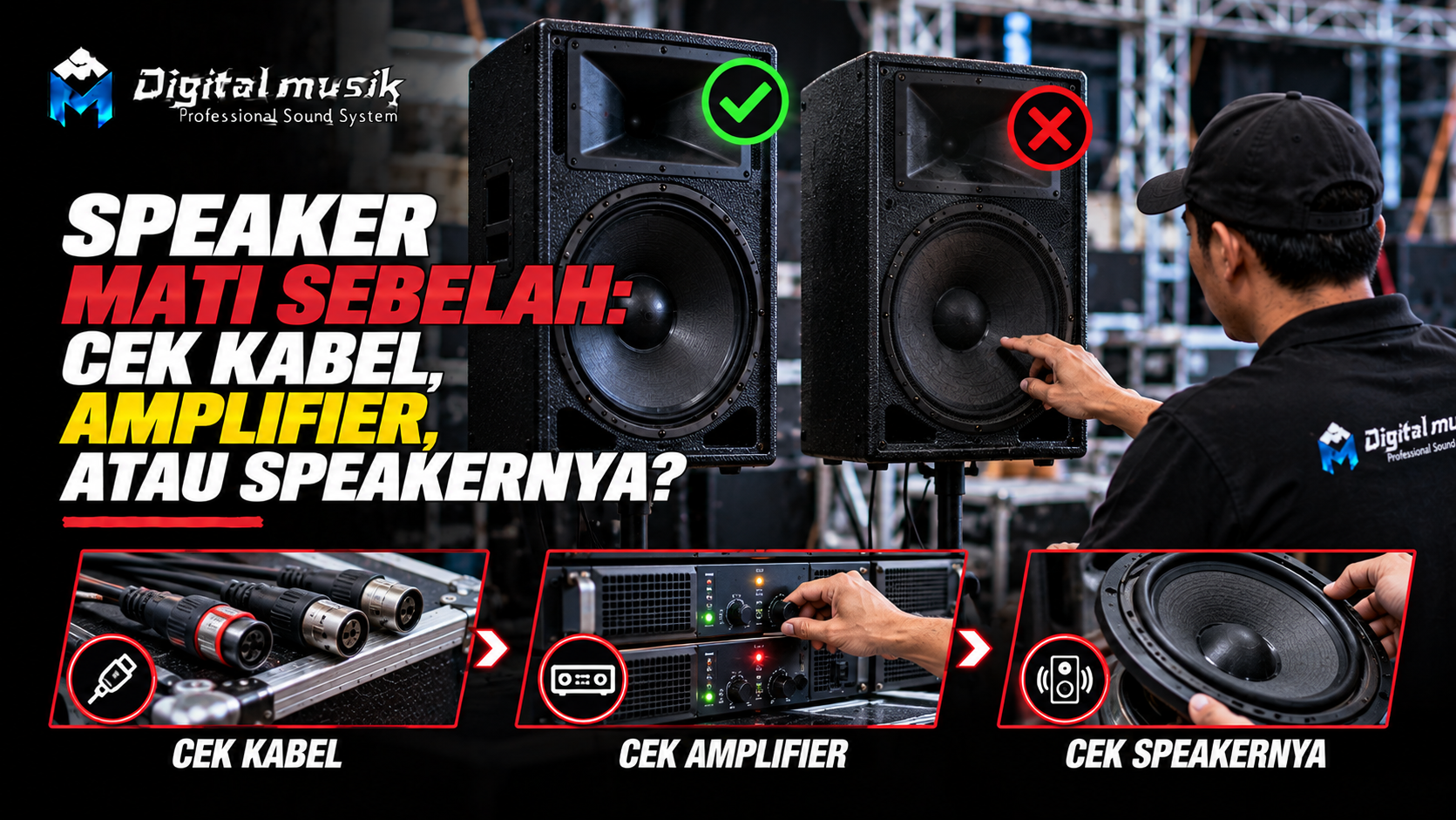
Have you ever noticed that the sound of speakers sounds different when moved from indoors to outdoors, or vice versa? This phenomenon is common and is influenced by various environmental and acoustic factors. Understanding these differences is important, especially for event organizers, committees, or audio operators who plan event needs to ensure optimal sound quality wherever the location.
Why Room Acoustics Affect Speaker Sound?
The main difference between indoor and outdoor environments lies in the presence and nature of sound reflections. Indoors, sound will interact with walls, ceilings, floors, and furniture. This interaction produces reflections (reverb) and resonances that can alter the original sound character from the speaker. Certain frequencies may be amplified, while others are attenuated, creating a different frequency response from what the speaker should produce.
Conversely, outdoors, there are almost no significant surfaces to reflect sound. Sound tends to spread more freely in all directions without many reflections. This means listeners will hear more direct sound from the speaker and less reverberant sound. As a result, outdoor sound often sounds clearer, sharper, and less 'full' compared to indoors, which has many reflections.
Environmental Factors Affecting Outdoor Speaker Sound
In addition to minimal reflections, several other factors in the outdoor environment also contribute to sound differences:
- Sound Dispersion: In open spaces, sound is not 'trapped' by walls, so its energy spreads wider. This means the sound intensity per unit area will be lower compared to indoors with the same volume.
- Wind: Wind can disrupt sound propagation, especially high frequencies, and can reduce audio clarity. Wind direction and speed are important factors to consider.
- Humidity and Temperature: Although their impact is smaller on frequencies commonly used in audio, changes in air temperature and humidity can slightly affect the speed of sound and sound absorption by the air, especially over long distances.
- Ambient Noise: Outdoor environments often have higher levels of ambient noise (vehicle sounds, crowds, nature). This demands a stronger audio system or more strategic speaker placement to overcome such noise.
Environmental Factors Affecting Indoor Speaker Sound
On the other hand, indoor environments present different acoustic challenges:
- Reflection & Echo: As mentioned, hard surfaces indoors reflect sound, creating reflections that can overlap with direct sound, causing the sound to sound 'muddy' or echoey.
- Room Resonance: The size and shape of a room can cause resonance at certain frequencies, amplifying or attenuating sound within that frequency range. This is often why bass feels excessive or lacking in certain rooms.
- Sound Absorption: Materials like carpets, curtains, or soft furniture can absorb sound, reducing the number of reflections. Conversely, rooms with many hard surfaces (e.g., a hall with ceramic floors and plain walls) will have many reflections.
- Proximity Effect: Especially with microphones, close proximity to a sound source can increase bass response. However, in the context of speakers, placing speakers too close to walls can also affect bass response.
How to Optimize Speaker Sound in Both Environments?
Understanding these differences is a good first step. For events, adjustments can be made:
For Outdoor Events:
- Use Speakers That Are Powerful Enough: Ensure the speaker power is adequate to overcome distance and ambient noise.
- Pay Attention to Speaker Placement: Direct speakers towards the audience and avoid placing them too close to objects that can reflect sound (if any). Consider using speakers with a dispersion pattern suitable for the audience area.
- Use the Right PA System: For large areas, more than one speaker point or a line array system may be needed for even coverage.
- Minimize Wind Effects: If possible, place speakers in locations sheltered from direct wind, or use wind covers for microphones if there is speech.
For Indoor Events:
- Consider Room Acoustics: Understand the acoustic characteristics of the room. Are there many reflections? Is there resonance?
- Use EQ (Equalizer): Adjust the speaker's frequency response using EQ to compensate for frequency absorption or amplification due to the room.
- Avoid Detrimental Placement: Do not place speakers too close to corners or walls that can unevenly amplify bass.
- Use Sound Dampeners (If Possible): If the room has too many reflections, using thick curtains, carpets, or acoustic panels can help.
Every event location has its own unique challenges. Understanding the basic principles of acoustics and how the environment affects speaker sound will help you make better decisions in planning and operating an audio system.
If you are planning audio needs for an event and want to ensure optimal sound quality in various conditions, discussing your specific needs with a professional audio expert can be very helpful. Understanding the characteristics of the room or outdoor area, as well as the type of event to be held, is key to choosing and placing the right speakers.