Starting a Small Live Band Performance: Choosing the Right Sound System
For a live band just starting out or operating on a small scale, having an adequate sound system is a crucial foundation for every performance. Good sound quality not only pleases the audience's ears but also helps musicians perform with more confidence. But what exactly are the crucial components needed to build an effective sound system for a small band?
Choosing the right equipment can feel confusing, especially for those new to the audio world. The main focus is to strike a balance between sound quality, ease of use, and, of course, the available budget. This article will thoroughly discuss the essential equipment that a small live band must have, so you can better prepare for every stage.
Core Sound System Equipment for Small Live Bands
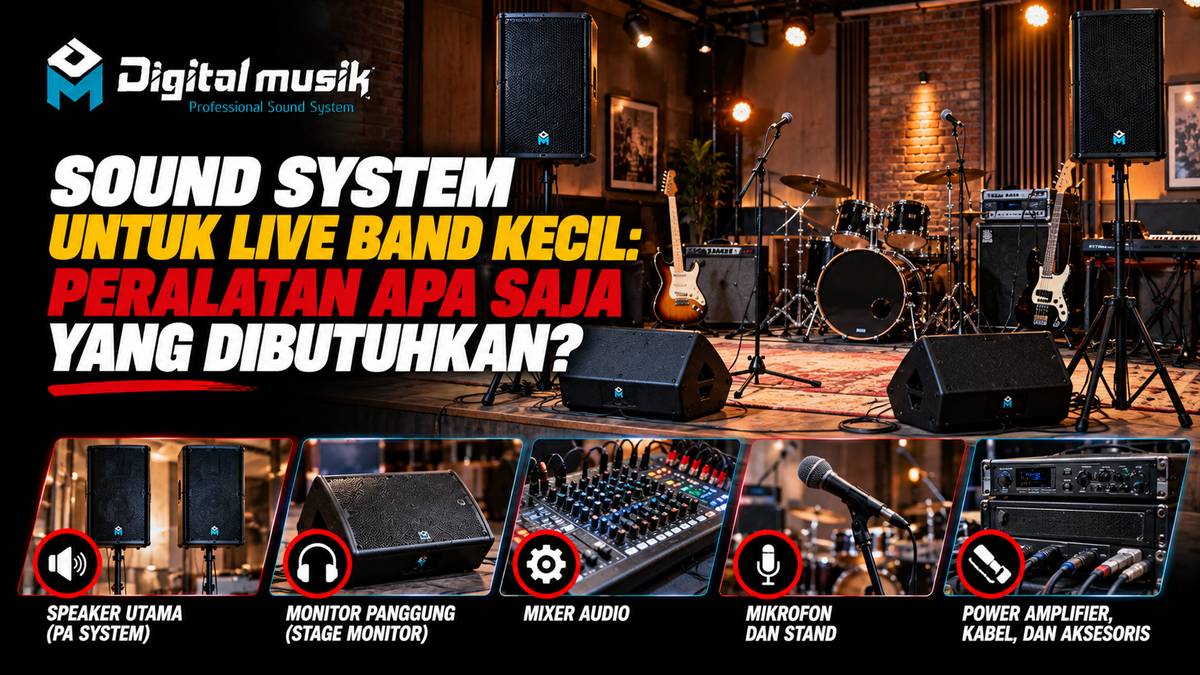
Building a sound system for a small live band does not require the complexity of a large concert. The focus is on basic functions to amplify instrument and vocal sounds so they are clear and balanced for the audience. Here is a list of the main components you need to consider:
1. Audio Mixer (Mixing Console)
The mixer is the brain of the sound system. This device functions to receive audio signals from various sources (microphones, instruments), adjust the level of each signal, process them (such as EQ or effects), and then send the combined output to the speakers.
- Number of Channels: For a small band, a mixer with 4 to 12 channels is usually sufficient. Consider the number of instruments and vocals that will be used. For example, lead vocal, backing vocal, guitar, bass, drums (if using drum microphones), keyboard.
- Connector Types: Ensure the mixer has XLR inputs for microphones and 1/4-inch jack inputs for instruments.
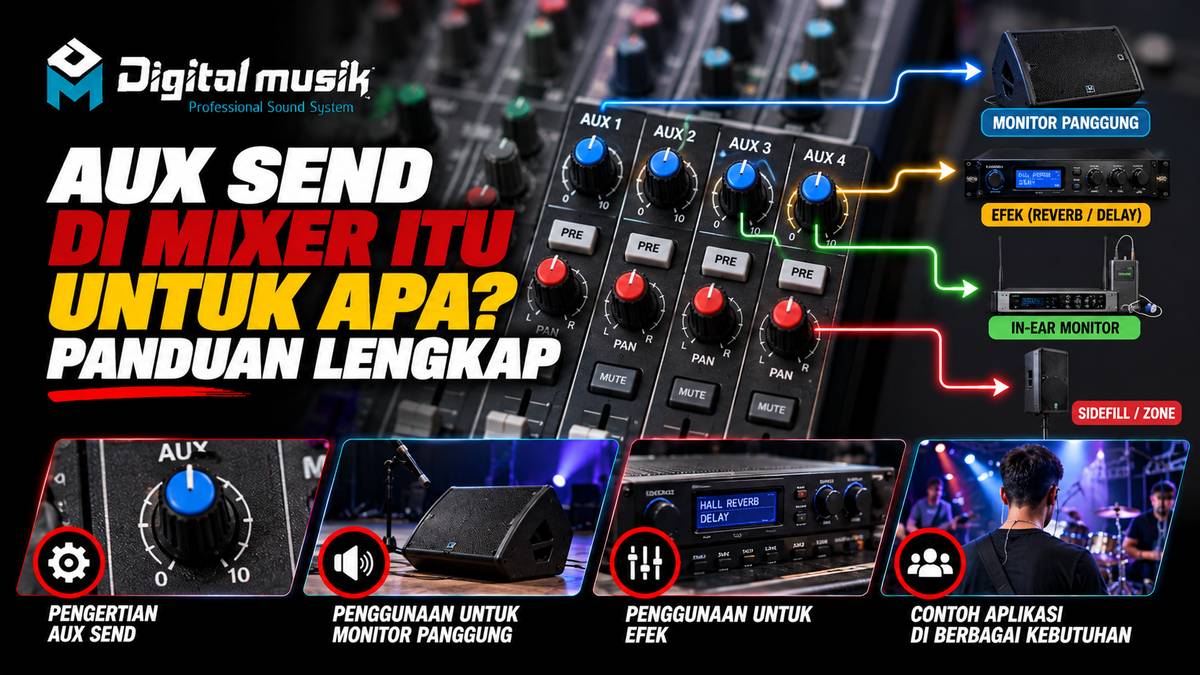
- Additional Features: Some mixers come with built-in digital effects (such as reverb or delay) which can be very useful for vocals. Features like Aux Send are also important if you plan to use separate stage monitors.
2. Active or Passive Speakers (PA System)
Speakers are the components that will deliver the sound processed by the mixer to the audience's ears. There are two main types to know:
- Active Speakers (Powered Speakers): These speakers have an integrated amplifier within them. Their advantage is practicality as they do not require a separate external amplifier. Simply connect from the mixer directly to the active speaker.
- Passive Speakers (Passive Speakers): These speakers require an external amplifier to boost the signal before it enters the speaker. Their advantage is flexibility in choosing an amplifier that matches the speaker's power requirements.
Considerations for Small Bands: Active speakers are often the preferred choice due to their ease of setup and portability. Speaker size (e.g., 10-inch, 12-inch, or 15-inch) will depend on the room size and how loud you need to play. For small bands in cafes or bars, a pair of 10 or 12-inch speakers is usually sufficient.
3. Microphones
Microphones are devices for capturing sound from its source. Microphone quality greatly affects the clarity of the sound that will enter the mixer.
- Vocals: Dynamic microphones like Shure SM58 or Sennheiser e835 are industry standards for live vocals due to their durability and ability to resist feedback.
- Instruments: Depending on the instrument, you may need different microphones. For acoustic guitars, small condenser microphones can be used. For drums, special microphones are needed for snare, kick, and overhead. However, for small bands focusing on simplicity, vocal microphones can often also be used for certain instruments if needed.
- Quantity: At least you need one microphone for the lead vocalist. Consider additional microphones for other instruments if you want more detailed sound.
4. Audio Cables (XLR and Jack)
Cables are vital connectors. Good quality cables will reduce the risk of noise or signal loss.
- XLR Cables: Used to connect microphones to the mixer, as well as from the mixer to active speakers or amplifiers.
- Jack Cables (TS/TRS): Used to connect instruments (guitars, keyboards) to the mixer, or from the mixer to the amplifier (if using passive speakers).
- Sufficient Length: Ensure you have cables of adequate length to reach from the sound source to the mixer, and from the mixer to the speakers, without being too taut or excessively stretched across the stage area.
5. Amplifier (If Using Passive Speakers)
If you choose passive speakers, you absolutely need an amplifier. The amplifier's job is to boost the audio signal from the mixer before it is sent to the speakers. Amplifier selection must be adjusted to the power (watt) and impedance (ohm) requirements of your speakers.
Tip: For small bands, it is often more practical to use active speakers with integrated amplifiers, so you don't have to bother choosing and carrying a separate amplifier.
6. Microphone Stands and Speaker Stands
These supporting pieces of equipment are crucial for optimal equipment placement. Microphone stands ensure microphones are at the correct height and position for singers. Speaker stands help place speakers at an ideal height so that sound can spread evenly throughout the audience and avoid interference from the floor.
7. Power Strip / Power Distribution
All this electronic equipment requires electrical power. A good quality power strip with multiple outlets will be very helpful for consolidating all power needs at one point, while also maintaining cable tidiness.
Additional Considerations for a Small Band Sound System
In addition to the core equipment, there are several other things to consider to maximize sound quality and performance comfort:
- Stage Monitors (Wedge Monitor): If the budget allows, a pair of stage monitors will greatly help musicians hear themselves and other instruments on stage, allowing them to play more precisely. These can be small speakers directed towards the stage.
- Direct Box (DI Box): For instruments like bass or keyboard, a DI Box can help convert the instrument's signal into a more suitable signal for the mixer, reduce noise, and allow for longer cable runs.
- Equalizer (EQ): Although many mixers already have built-in EQ, an external equalizer can provide more detailed control to shape the sound character.
- Additional Power Cables: It's always good to have spare power cables or extensions just in case.
Choosing the Right Solution with Digital Musik
Building an effective sound system for a small live band is about understanding basic needs and choosing the most suitable equipment. Every element, from the mixer that controls sound dynamics to the speakers that disseminate it, plays a crucial role in the success of your performance.
If you feel the need for a more in-depth discussion regarding technical specifications, selecting components most suitable for your band's music genre, or even considering custom solutions for unique stage needs, PT Digital Musik Indonesia is ready to be your discussion partner. With experience in the professional audio ecosystem, we can help you map out your needs and find optimal audio solutions, whether for OEM speaker cabinet needs, custom speaker cabinet, or other technical consultations.